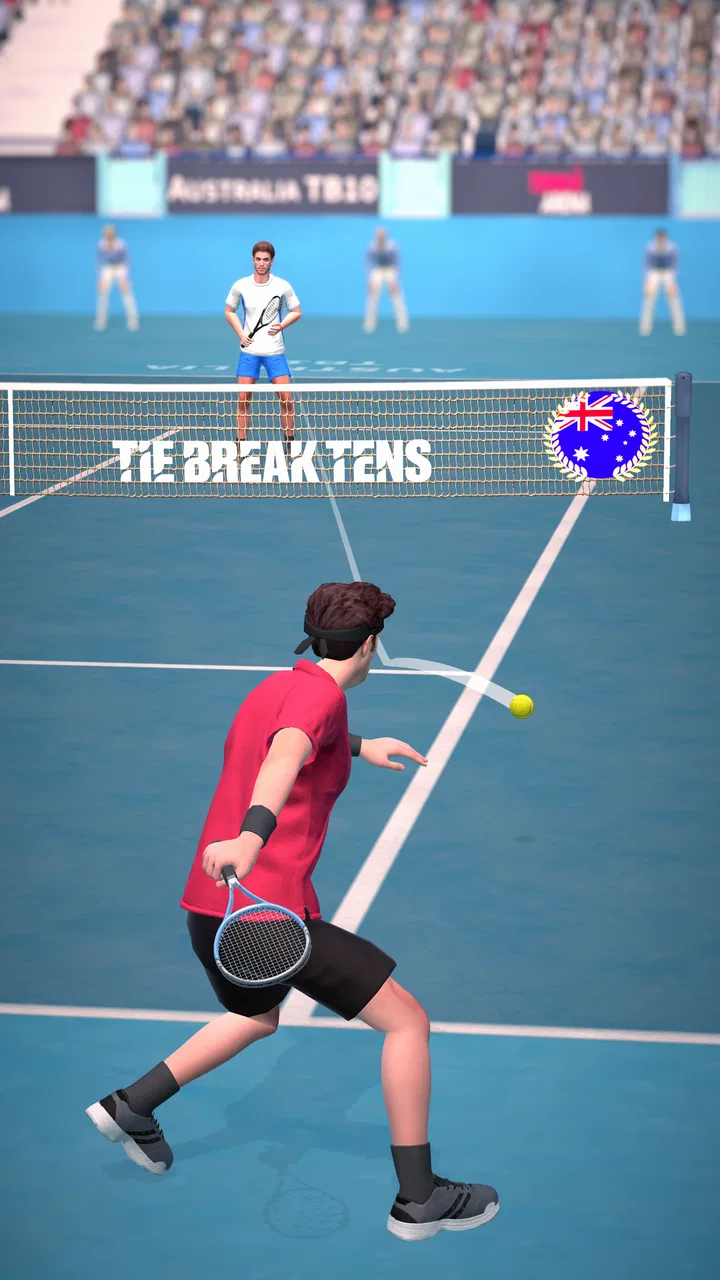
Tennis Arena
- 4.4
- Rating
- 10.00M
- Installs
- Free
- Price

 Analysis by App-foxy
I approached Tennis Arena as a quick tennis game rather than a full simulation, and that distinction matters from the first match. It is built around the fast, compact appeal of Tie Break Tens tennis: short exchanges, immediate decisions, and little time spent waiting for a long set to develop. I found it easy to pick up when I wanted a few minutes of sport without committing to a lengthy session.
That makes it a useful choice for a bus ride, a coffee break, or the moment when I want something competitive but not mentally heavy. It is free to start, rated for Everyone, and developed by Helium9 Games. The game has also attracted a 4.5 average from around 83 thousand ratings and has passed 10 million installs, so it is clearly aimed at a broad mobile audience rather than only dedicated tennis fans.
What to consider before choosing a mobile tennis game
My first decision criterion is match length. Traditional tennis games often ask me to learn a larger control system, manage longer rallies, or work through a full match structure. Tennis Arena feels more suitable when I want the pressure of tennis condensed into a smaller session. The tie-break format keeps each point meaningful, because a poor decision can change the direction of the whole contest.
You May Also Like

 Google Keep - Notes and lists
Google Keep’s Quiet Growth Shows the Appeal of Simpler Notes
As mobile work gets busier, Google Keep keeps winning a simple contest: capture a thought quickly, find it later, and get on with the day.

 Blood Strike: 2.5 Anniversary
Blood Strike’s Loadouts Turn Every Drop Into a Tactical Gamble
A close look at Blood Strike’s custom loadouts: how fast access to signature weapons reshapes its battle royale rhythm, rewards preparation, and narrows the gap between fights.

 Pandora - Music & Podcasts
Pandora’s Music Is Easy to Start, but Harder to Recover
Pandora’s strength is its low-effort path from a seed to a station. Its weak spot is how much confidence it asks you to place in connection, setup, and quiet recovery.

 8 Ball Pool
 Is Built on Rivalries, Rematches, and Routine
A close look at the rivalries, rematches, shared routines, and unanswered safety questions that turn a quick pool match into a persistent mobile community.

 Samsung Music
’s Quiet Strength Is Playing What You Already Own
Its reach comes less from spectacle than from dependable access to a personal library. That simplicity is both the app’s strongest retention engine and its ceiling.

 AccuWeather: Weather Radar
AccuWeather Review: A Quick, Clear Forecast for Everyday Decisions
For everyday plans, the best forecast is the one you can understand quickly. AccuWeather makes rain timing, radar, and local conditions easy to act on, with a few trade-offs.
More From Our News Desk



The second criterion is control comfort. On a phone, I do not want to fight the interface while trying to read a serve or place a return. The best mobile tennis experience is not necessarily the one with the most buttons; it is the one that lets me understand why a point was won or lost. Here, I paid attention to whether my mistakes felt like bad timing, poor positioning, or simply a missed input. That distinction helps determine whether the game will feel satisfying after the novelty wears off.
The third question is how much progression a player wants. A short-format tennis game can be excellent for repeated attempts, but it may feel limited to someone looking for a detailed career, deep player customization, or a serious recreation of the sport. I would choose this game for compact competitive sessions first, not as a replacement for a dedicated console-style tennis simulation.
There is also the question of spending. The download is free, while optional in-app purchases range from $1.99 to $109.99 per item. That broad range is worth remembering before starting, especially if the game becomes part of a daily routine. I prefer to treat the free version as the test: play enough to decide whether the core rallies are enjoyable before considering any purchase.
The short-match format is the main reason to play
The strongest part of the experience is the way the format creates urgency without demanding a long appointment. In a normal tennis match, a slow start can be recovered over many games. In a compact tie-break setting, I have to pay attention earlier. A careless return or rushed attack matters immediately, which gives even a brief session a clear beginning, middle, and end.
This structure also makes the game easier to fit around everyday life. If I have only a few minutes, I can start a match without wondering whether I will need to abandon it halfway through. That is a practical advantage over many sports games that are designed around longer fixtures. It also makes the game approachable for someone who likes tennis but does not follow every tournament or understand every tactical detail.
My useful tip is to avoid treating every point as an opportunity to attack. In a short match, the temptation is to force a winner because every point feels urgent. I found that a safer rhythm is often better: first read the opponent, then choose whether the next shot should create pressure or simply keep the rally under control. This is not a complicated strategy guide, but it changes the game from random tapping into deliberate point construction.
Why the first sessions are accessible
The sports category is full of games that look simple but hide demanding controls. Tennis Arena has a more welcoming starting point because the central idea is immediately recognizable: serve, return, move, and try to win the exchange. I did not need to approach it like a rules manual. A newcomer can understand the objective quickly, while a more experienced player can begin refining timing and shot choices.
That accessibility is especially useful when sharing the game with a younger player. The Everyone content rating makes it a natural candidate for family-friendly casual play, although I would still keep an eye on optional purchases if a child is using the device. The game is easy to explain in a sentence, and the short format avoids the frustration of asking a beginner to stay focused through a long match.
Another advantage is that the compact design gives mistakes a manageable cost. Losing a match does not feel like losing a large block of time. I can try again while the previous points are still fresh in my mind, which makes practice more effective than it would be in a slower game. That quick retry loop is one of the less obvious strengths: it encourages learning through repetition without making the player study a complex tutorial.
Where the experience can become repetitive
The same short-match focus that makes the game convenient can also become its main limitation. If I play repeatedly for a long stretch, the basic rhythm may start to feel familiar. Players who need a broad tennis package—with several match types, a detailed season structure, or a highly specific simulation of professional play—may eventually want something deeper.
I also think the game asks the player to enjoy repetition as part of improvement. The appeal comes from trying to make better decisions in similar high-pressure situations, not from expecting every session to feel completely different. That is fine for me when I am chasing cleaner play, but it is less suitable if I need constant novelty from a sports game.
There is a second kind of friction around progression and spending. Free-to-play sports games can make players think about upgrades, resources, or purchases even when the basic match is enjoyable. I would not begin with the assumption that spending is required. Instead, I would watch how much the free experience supports the way I want to play and decide later. The presence of purchases from $1.99 up to $109.99 means impulse buying deserves more attention than the simple “free” label suggests.
How it compares with other ways to play tennis on mobile
Compared with a full tennis simulation, this game wins on immediacy. I can recommend it to someone who wants the feeling of a decisive rally without learning a large control scheme or committing to a long match. A simulation is likely the better fit for a player who values detailed tactics, realistic match management, and the patience of a longer contest. I would not ask Tennis Arena to serve that audience’s needs.
Compared with arcade sports games, it sits in an appealing middle ground. It has the quick accessibility I expect from an arcade title, but the tennis format still gives each exchange a recognizable purpose. A purely casual arcade game may be better for someone who wants spectacle and almost no consequences. This one is more rewarding when I want my timing and choices to matter, even within a compact match.
Compared with offline puzzle or card games, it offers a more active break. I have to watch the point, react, and make decisions instead of simply waiting for a turn or planning several moves ahead. On the other hand, a puzzle game may be better when I want a calmer experience that does not punish a distracted moment. Tennis Arena works best when I can give the match at least a little attention.
Compared with multiplayer-focused alternatives, the important question is what kind of competition I want. This game’s appeal is the tennis encounter itself, not a promise that every player is looking for the same social experience. If my priority is chatting with friends, building a club, or maintaining a large online community, I would compare those features carefully in another title before switching. If my priority is simply a quick tennis contest, Tennis Arena is the more direct choice.
Small habits that make sessions more enjoyable
I found three habits particularly useful. First, I would play the opening points conservatively instead of immediately chasing spectacular winners. Short matches reward awareness, and learning the opponent’s rhythm is more valuable than trying to finish every rally at once.
Second, I would use the game as a focused break rather than background entertainment. A notification, conversation, or half-watched video can make a close point feel unfairly lost. Because the format is brief, giving it a few undistracted minutes improves the experience more than playing for a long time while multitasking.
Third, I would set a personal spending boundary before exploring optional purchases. This is not a criticism unique to the game; it is simply sensible for any free sports title with items priced across a wide range. The best test is whether I still enjoy the rallies when I am not trying to accelerate progress. If the answer is yes, I know the core appeal is doing the work.
One less obvious use case is learning whether I actually enjoy tennis game mechanics before buying a more elaborate title. Tennis Arena gives me a low-commitment way to test my interest in timing, positioning, and point pressure. If I keep returning because I want to improve rather than because I am waiting for a reward, that is a useful sign that a deeper tennis game might be worth exploring later.
Device expectations and practical details
The game supports Android devices running version 8.0 or later, which covers a large range of phones but still makes the operating-system requirement worth checking before downloading. Its current version is 15.5.6, so I would install the latest available build rather than rely on an older copy. Updates can matter in a competitive game because small changes to balance or controls may affect how familiar the matches feel.
The game was released on December 13, 2021, and its continued presence in the sports category suggests that it is not merely a one-session novelty. Still, popularity alone should not decide the purchase question. The useful test is personal: do I enjoy the short pressure of a tie-break match, and do I want to repeat that loop often enough for it to earn space on my phone?
For storage and battery expectations, I would approach it like any active sports game rather than a static utility. I would close unnecessary apps if my phone is older, keep the device comfortable during longer sessions, and avoid starting a match when I know I may need to stop suddenly. These are simple habits, but they reduce the frustration of losing a close point because the phone was busy or attention was elsewhere.
Who should choose it, and who should skip it
I would recommend Tennis Arena to a casual tennis fan, a player who enjoys quick competitive rounds, or anyone looking for a sports game that can fit into small gaps in the day. It is also a sensible starting point for someone who has never played a tennis game on mobile and wants to learn the basic rhythm without committing to a complex simulation.
I would be more cautious recommending it to a serious tennis enthusiast who wants a detailed recreation of a full match. That player may prefer a title built around longer rallies, more extensive tactical control, or a richer career structure. I would also point elsewhere if the main goal is a relaxed game with no pressure, because the short format makes every point feel important.
Players who dislike free-to-play design should make their decision carefully. The game costs nothing to begin, but optional items can reach $109.99. I would not let the free entry point hide the need for purchase discipline. Anyone who can enjoy the match loop without feeling pushed to spend is in a much stronger position to appreciate it.
My recommendation after weighing the trade-offs
My overall view is positive, with a clear boundary: Tennis Arena is best understood as a fast tennis competition for mobile, not as a complete tennis simulator. The format gives it a strong identity. I like that I can play a meaningful contest in a short window, learn from mistakes quickly, and return without rebuilding my focus from the beginning.
The game wins when convenience, accessibility, and point-by-point tension matter more than depth. It loses ground when I want long-form progression, extensive simulation, or a constantly changing variety of modes. That is not a problem if I choose it for the right reason; it becomes a problem only when I expect it to replace a different kind of tennis game.
For a friend asking me whether to install it, I would say yes if you want a free sports game for quick sessions and you enjoy improving through repeated rallies. Start without spending, play several matches at different times of day, and notice whether the decisions feel satisfying rather than merely fast. If they do, Helium9 Games has made a compact tennis experience that is easy to recommend.
If you want a deep career, a long realistic match, or a completely purchase-free environment, I would skip it and look for an alternative designed around those priorities. For everyone else, the balanced choice is simple: try the free version, set a spending limit, and judge it by the quality of its short matches. Its real strength is turning a few minutes into a tense tennis contest without demanding a full afternoon.
FAQs for Tennis Arena
01What platforms is Tennis Arena available on?
Tennis Arena is available for both Android and iOS platforms. You can download it from the Google Play Store for Android devices and the Apple App Store for iOS devices. The game is optimized for a wide range of smartphones and tablets to ensure a smooth gaming experience.
02Does Tennis Arena require an internet connection to play?
Yes, Tennis Arena requires an internet connection for full functionality. While you can enjoy some offline features, the game’s competitive multiplayer mode and live tournaments need an active connection. This ensures that you can compete against players worldwide and keep the game updated with the latest features.
03Are there in-app purchases in Tennis Arena?
Tennis Arena offers in-app purchases to enhance your gaming experience. You can buy virtual currency to unlock premium features, customize your player, or upgrade equipment. While these purchases can give you an edge, they are optional, and you can still enjoy the game without spending real money.
04What age rating is Tennis Arena suitable for?
Tennis Arena is rated for players aged 3 and up. The game features family-friendly content without violence or inappropriate material, making it suitable for all ages. However, parents should note that there are in-app purchases, which may require oversight if younger children are playing.
05How realistic is the gameplay in Tennis Arena?
Tennis Arena is designed to provide a realistic tennis experience with intuitive controls and lifelike graphics. The physics engine mimics real-world tennis scenarios, allowing you to perform various shots and strategies. The game also features licensed tournaments and players, adding to its authenticity.
Pros
- Intuitive controls enhance gameplay.
- Stunning graphics capture real-life courts.
- Variety of tournaments keeps it engaging.
- Customizable avatars add personalized touch.
- Smooth multiplayer experience with friends.
Cons
- Requires constant internet connection.
- In-app purchases can be costly.
- Limited offline play options.
- Occasional lag during matches.
- Ads can interrupt gameplay flow.

Tennis Arena
Gallery